Oops! Something went wrong while submitting the form.
Notice: It looks like you are visiting us from United Arab Emirates or have selected it as your residency location.
For accurate information and services under the correct licensed entity, please visit the appropriate section of our website. For more information view Regulatory Information
For accurate information and services under the correct licensed entity, please visit the appropriate section of our website. For more information view Regulatory Information
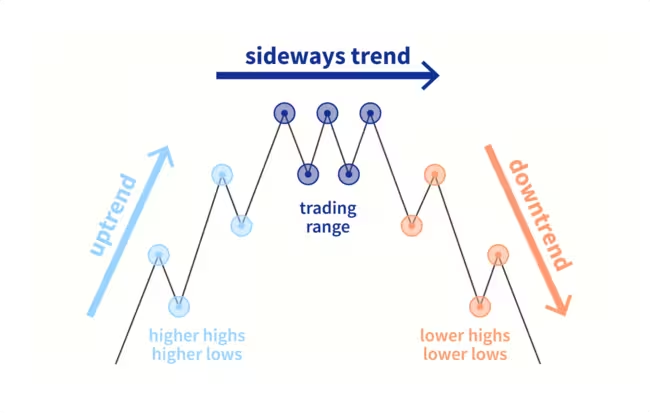
Succeeding in the financial market requires understanding market dynamics and implementing the right strategies. One of the most common ways to trade is to follow the trendand seek to capitalise on both sides of the market.
Trend-tradingstrategies may offer opportunities in volume-dense markets, where projections move strongly and consistently in any given direction.
Let’s explain how trend following works and the effective best trading strategies for trending markets.
[[aa-key-takeaways]]
Key Takeaways
Trend-following is a trading strategy that implies executing positions as prices go up and down.
This momentum tradingstrategy follows price direction to aim to maximise profits and minimise risks.
Trend trading suits multiple assets, including Forex, commodities, and cryptocurrencies.
Trading with the trend is better done with technical tools and indicators that support timing and confidence.
[[/a]]
Trend-Following Trading Strategies
Trend-following strategies focus on identifying sustained market movements and entering trades in that direction. This approach allows traders to seek to capitalise on momentum while avoiding the stress of predicting reversals. Instead of trying to time tops and bottoms, they wait for confirmation and follow the trend.
One of the key advantages of trend trading is that it works in various timeframes, from intraday positioning to long-term holding, making it a versatile tactic that suits different traders and markets.
Whether using trendline in Forex or earning from volatile crypto moves, trend-following helps focus on ongoing developments, following the overall sentiment.
Consider starting trend trading with a reliable trading platform that enables you to locate and seek to capitalise on markets more effectively. B2PRIME enables individual and institutional traders to use real-time charting tools and advanced trend indicators to enter, aim to capitalise on market opportunities.
Momentum trading thrives in liquid, volatile markets where price trends are frequent and sustained. Some markets or sectors have stronger volumes and more persistent participant behaviour, making them more suitable for trend-trading techniques.
By understanding the price dynamics in Forex, cryptocurrencies, equities, and commodities, you can aspire to make the most of your trading activity.
Forex
The foreign exchange market is ideal for trend trading due to its high liquidity, high availability, and frequent macro-driven dynamics. The changing political environment, monetary policies, and trade landscape create breakouts in currency pairs, making it easier to apply trendline Forex techniques, moving averages, and momentum indicators. However, high volatility can also lead to significant losses.
Moreover, the depth and volatility of Forex during marketplace overlap and peak hours offer potential consistent opportunities across major pairs.
Cryptocurrencies
Cryptocurrencies and digital assets are highly volatile, providing participants with substantial momentum trading potential. The changing regulatory stance and fluctuating speculations cause strong price movements and create potential trend trading setups.
Traders often follow price changes in cryptos by using breakout strategies or moving averages, especially on established assets, like Bitcoin and Ethereum, to aim on minimise the risk associated with emerging coins.
Commodities
Gold, oil, and agricultural products fluctuate based on geopolitical factors and changes in supply and demand. These commodities may suit trend strategies due to their cyclical nature.
Therefore, some traders may use momentum trading tools to follow long-term commodity price changes, leveraging breakout or retracement entries for possible consistent movements in volatile markets.
Equities
Stocks generate trends oftentimes based on earnings, economic shifts, and investor sentiment. Moreover, acquisitions, scandals, and industry news can cause significant trends that involve sector or company-specific breakouts.
Traders may follow stock trend movements with daily charts and indicators during earnings season or market rallies to earn in both short and long timeframes.
6 Trend Trading Strategies
Successful trend trading requires a strategic approach tailored to market conditions. While there is no one-size-fits-all, the following six strategies can help you follow trends more effectively, from spotting new projections to existing positions.
Breakout Strategy
The breakout strategy involves entering a trade when the price moves beyond a defined support or resistance level, often signalling the start of a new trend. Traders monitor consolidation ranges or price chart patterns while waiting for a decisive trajectory “breakout” accompanied by volume.
Once the breakout occurs, the market moves in the trend direction, and traders aim to ride the momentum. Stop-loss limits can be placed below the breakout point to manage risks, in case the price moves in the opposite direction.
This trend strategy may help catching early moves, reducing lag and aim to improve earning potential. Breakouts can be particularly effective in volatile markets like crypto and Forex, where prices often accelerate after breaching key levels, attracting significant participation.
Intraday Trading
Intraday trend trading (or day trading) focuses on capturing smaller price movements within a single trading session. You can use moving averages and volume indicators to analyse price data and short-term charts (5-minute or 15-minute) and observe micro-movements.
The goal of this strategy is to enter orders during peak hours, often after news releases or session opening hours. This approach requires strict risk management and correct decision-making to avoid entering wrong trends or being caught in the retracement.
Intraday trading suits active users who prefer frequent order execution and shorter holding times, especially in markets that break out and change direction during the same day.
Pullback and Retracement Entry
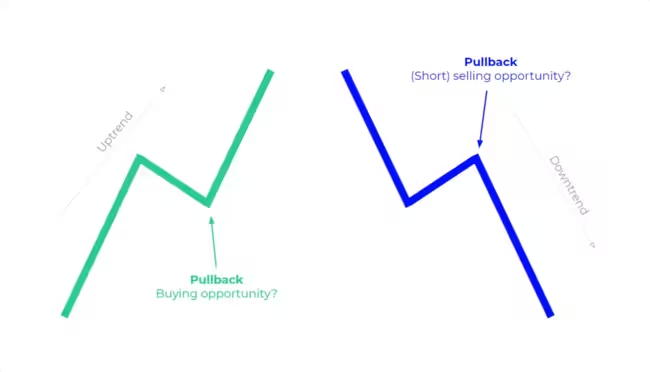
Pullback strategies involve entering a trade during a temporary price reversal within the primary trend. Instead of buying at market peaks, you can wait for a retracement to happen at a key level and then enter when the trend resumes.
This requires an accurate analysis of support and resistance levels, using tools like the Fibonacci retracement levels or the moving averages.
This approach allows for better risk-reward ratios and avoids chasing the market. You can use candlestick price patterns or confirmation indicators to time your entry, especially in steady markets where bullish and bearish movements develop gradually and risks can be lower.
Trailing Stop Strategy
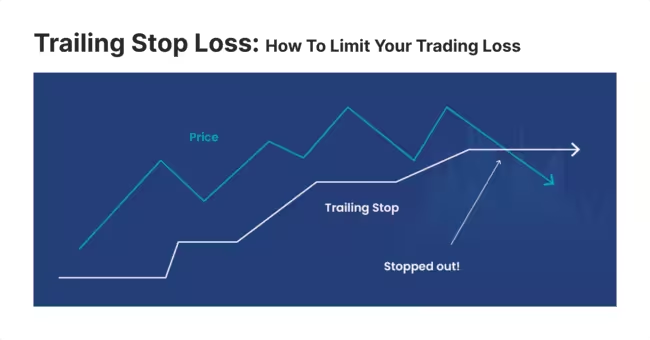
The trailing stop strategy involves adjusting the stop-loss level as the trade becomes profitable, locking in realised gains without exiting the market, allowing the price trajectory to continue.
You can set a stop distance behind the current market price (20 pips, for example), which moves as the price changes in your favour. This approach helps reduce emotional decision-making and supports disciplined trade management.
Trailing stops can be ideal for trend trading because they allow profits to run while protecting against sudden reversals. Whether trading FX, stocks, or commodities, trailing stops help you manage trades more systematically and aim to capture more of a trend movement.
Trendline and Channel Trading
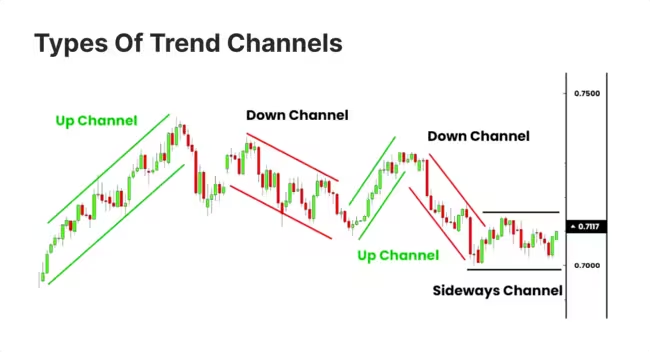
Trendlines and channels help trend followers visualise price direction and structure by connecting higher lows in an uptrend or lower highs in a downtrend, guiding opening and closing prices.
Channels extend this by adding parallel lines to capture price movement within a trading range, which can be useful to identify pullbacks, breakouts, and strengths.
In trendline Forex trading, price often respects these technical boundaries, offering clear signals and blending visual simplicity with technical insight. Drawing trendlines accurately is essential for planning entries, managing risk, and understanding market rhythm.
Momentum Trading
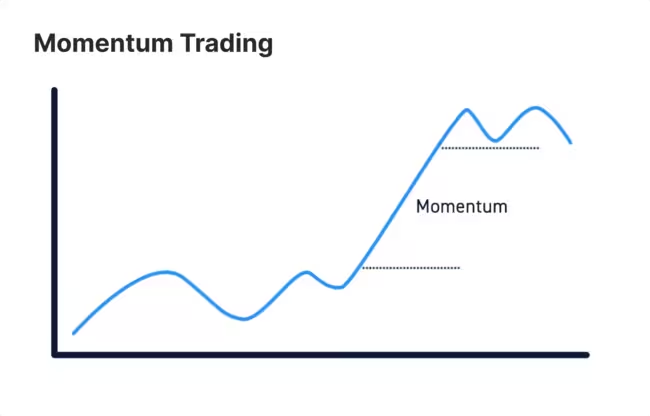
Momentum trading focuses on executing trades when the price shows strong directional movement backed by high volume or volatility. The idea is to join the market once momentum builds, riding the wave until it slows.
Traders often scan for assets making new highs or lows and use indicators like RSI or MACD to confirm momentum strength, so that they can enter quickly with tight risk controls.
This swing trading strategy suits fast-moving markets, such as crypto or Forex, where speculation drives prices and causes significant movement in one direction.
Momentum trading allows traders to seek to capitalise on price acceleration and avoid stagnant markets where trend signals are weak or unreliable.
Use These Technical Indicators
Technical indicators support trading by assisting in the process of identifying a trend’s direction, strength, and possible reversal points. They may provide signals to enter or exit positions, manage risks, and aim to improve outcomes.
Moving Averages
The moving averages are one of the most used technical indicators, known for their versatility and customisability. They help monitor historical average prices and smooth out data to highlight momentum. For example, when the price is above the 50-period EMA, traders may look for long opportunities.
Their simplicity and effectiveness make them one of the essential tools in any trend strategy. You can enhance your readings using the combination of simple and exponential moving averages to spot uptrends and downtrends.
You can also apply multiple timeframes and analyse their crossovers. For instance, if the 50 EMA crosses above the 200 EMA, the market signals changes.
Moving averages also serve as dynamic support and resistance during pullbacks, while in momentum trading, they help trade with trend momentum and can help avoid countertrend setups, particularly for Forex and stock market analysis.
Moving Average Convergence Divergence
MACD is a lagging indicator that shows the relationship between two moving averages. It helps traders identify trend direction and momentum shifts and consists of the MACD line, signal line, and histogram.
If MACD crosses above the signal line, it may signal a bullish market.
If MACD crosses under the signal line, it may signal a bearish market.
Divergences between MACD and prices indicate trend weakening.
MACD helps confirm entries and exits, particularly during pullbacks or breakouts. Its versatility makes it suitable for all markets, from equities to crypto, aiding swing traders who want to follow the trend while measuring strength and timing precisely.
Parabolic SAR
The Parabolic SAR (Stop and Reverse) plots dots above or below the price, indicating price direction and potential reversal points. As price moves, the dots trail it, allowing for profit protection.
This reliable indicator is especially useful in fast-moving markets where trends can shift quickly, enabling traders to follow the trend and set dynamic stop-loss levels.
When the dots are below the price line, it may signal an uptrend.
When the dots are above the price line, it may signal a downtrend.
This system simplifies decision-making and supports momentum trading by showing clear continuation or exit signals. Parabolic SAR is often combined with other tools to confirm trend strength and manage risk more effectively.
Relative Strength Index
RSI measures the speed and change of price movements, indicating overbought or oversold conditions on a 0–100 scale. The relative strength index helps identify entry points during pullbacks in an existing trend.
A reading above 70 may suggest overbought.
A reading below 30 can indicate oversold.
A reading between 30 and 70 often means consolidation or equilibrium.
As a momentum trading tool, RSI allows you to assess the trend and look at ways to avoid entering exhausted moves, highlighting momentum shifts and divergence, aiding early reversal detection.
Conclusion
Trend trading offers structure and consistency for traders using technical analysis. It is one of the most commonly used strategies in financial markets, allowing you to pursue benefiting from consistent price movements and prevailing trends.
By following the trend with technical analysis tools, you can navigate markets more systematically. Whether trading Forex, crypto, or commodities, momentum trading strategies can help with timing and seek to reduce incorrect entries.
Consider trading with powerful trading platform that offers tools including interactive charts, built-in indicators, and more available at B2PRIME.
Trading involves high risk of rapid capital loss due to leverage and volatility. Consider if you understand and can afford these risks.
You can implement trend-trading strategies by identifying the direction of the price using tools like moving averages, trendlines, and momentum indicators. Then enter trades using strategies like pullbacks or breakouts to aim for time entries in alignment with prevailing market momentum.
Are trend-following strategies profitable?
Trend-following strategies seek to capture price movements. Profitability depends on market conditions, discipline, risk management, and technical indicators, however the risk is always present, with no guaranteed outcome.
Should you always trade with the trend?
While trading with the trend may offer a more structured approach, it is not always ideal. Some market conditions, like low volatility or range-bound periods, may be better handled with other strategies.
Is the crypto market suitable for trend trading?
The crypto market shows high volatility that can be suitable for trend analysis. Traders should use appropriate risk management alongside breakout or momentum strategies, driven by sentiment, news, and global market factors.
[[/a]]
Connect with Our Experts
Our team is equipped to provide solutions precisely to your requirements. Let's explore your options and discuss how we can support your objectives



.svg)