Oops! Something went wrong while submitting the form.
Notice: It looks like you are visiting us from United Arab Emirates or have selected it as your residency location.
For accurate information and services under the correct licensed entity, please visit the appropriate section of our website. For more information view Regulatory Information
For accurate information and services under the correct licensed entity, please visit the appropriate section of our website. For more information view Regulatory Information
Hang around traders long enough and you start noticing how fast people fall into their own camps. Some folks are built for the slow stuff. They’ll hold a position for days, maybe longer, just watching the chart breathe and wobble around a level. Others can barely make it through a five minute candle without getting jittery. That split between swing trading and day trading isn’t something you study. You just feel it once you’ve been in the room long enough.
Swing traders hold for days or weeks. Day traders close out before the session ends. Both groups touch leverage at some point: CFDs, FX, crypto, and that’s where the regulators start raising eyebrows as the leverage carries high risk. The FCA keeps repeating that about 75% of CFD accounts lose money, and honestly anyone who’s watched a few cycles isn’t shocked.
This guide isn’t about selling either style. It’s about helping you figure out which one could fit the way you think, the time you actually have, and what kind of risk feels tolerable. As a regulated broker, B2PRIME can support both day and swing trading, so the choice is yours, but it’s a meaningful one.
What is Swing Trading? Swing Trade Meaning
The basic swing trade meaning is simple enough: you’re trying to catch multi-day price moves, not the tiny intraday noise. Traders hold a position for a few days to a few weeks, so there’s a lot of waiting, adjusting, second-guessing, and trying not to touch the chart every hour.
A swing trader usually builds a case around structure: trend direction, support, resistance, and momentum fading or picking up again. They’re working off the 4-hour, daily, sometimes weekly charts. Many swing traders fold in light fundamentals too, like earnings, and big macro prints, because those events can push a trend further than you’d think.
Technical tools dominate though: moving averages, RSI, MACD, breaks, pulls, Fibonacci levels, all the usual suspects.
For people deciding between a swing trade vs day trade style, swing trading fits people who can step away without panicking. Swing traders place far fewer trades than day traders. You’re picking your spots, not chasing every squiggle. The strategy can work across almost anything: equities, FX, indices, commodities, crypto, all the high-risk CFD variants available via brokers like B2PRIME, which streams liquidity for.
If you don’t want markets chewing up your entire day, swing trading comes as close as anything to a middle ground.
What is Day Trading?
In the swing vs day trading debate, day trading often looks more exciting from the outside. You’ve got screens everywhere, traders making quick decisions and money being made and lost in seconds. With day trading, you open and close positions within the same session, sometimes within minutes. No holding overnight. Sounds simple until you actually try doing it for a week straight.
Intraday traders live inside the 1-minute, 5-minute, 15-minute charts. They’re glued to order flow, level shifts, short bursts of volatility across FX, indices, stocks, and crypto. Anything that actually moves. If the data feed lags or the platform stutters, you feel it instantly.
Without low latency and a solid routing path, even good ideas fall apart before they hit the venue. Leverage gets added on top of this, usually through margin accounts, because most intraday moves are small and need amplification to matter.
The uncomfortable part? Regulators and independent researchers keep finding the same pattern: roughly 70% of retail FX day traderslose money each quarter. That’s the reality of trying to compete in a fast lane where hesitation costs money.
Day trading works for some. But it asks for full attention and a temperament that can take constant pressure without breaking routine.
The Difference Between Day Trading and Swing Trading
Once you sit with actual traders, the difference between day trading and swing trading feels a lot bigger than whatever the books say about timeframes. They’re two completely different ways of dealing with the market. The pace is different, the mental load’s different, even the number of choices you’re forced to make in a single morning.
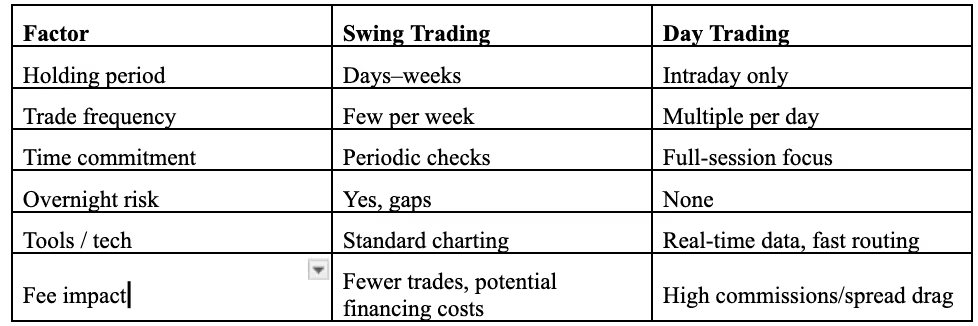
Day traders might fire off ten trades before grabbing a coffee, adjusting constantly as spreads widen or liquidity thins out. Swing traders pick their spots. Maybe a couple setups a week. Sometimes nothing at all. That slower tempo gives them room to think and avoid clicking just because they’re bored, which is probably why beginners drift toward it without needing anyone to explain why.
Risk feels different too. Swing traders deal with overnight gaps, unexpected news, and the occasional “why-is-this-20-points-away-from-my-stop?” moment. Day traders dodge that entirely but pay for it with intensity and higher friction costs.
Both styles work. They just demand different things from you, and from your setup.
Swing Trader vs Day Trader Mindset
The real split between a swing trader vs day trader shows up in temperament, too. Some people are built for slow, steady setups. You’ve probably met the kind of trader who doesn’t mind waiting three days for price to come back to a level they’ve been watching.
For swing trading, you need enough calm to hold through minor pullbacks without spiraling into second-guessing. A swing trader checks charts a few times a day, makes a plan, and sticks to it unless the market gives a real reason to change course.
Day traders, meanwhile, operate at a different beat. They’re running on rapid decisions, short memory, and no attachment to a trade once it’s wrong. You really do need emotional discipline. Anyone who’s traded intraday knows how fast revenge trading creeps in after a bad fill or a dumb impulse click.
It’s why plenty of traders start with swing trading first. Swing trading options give you room to learn without the market breathing down your neck every minute.
Day Trading vs Swing Trading Pros and Cons
Day trading and swing trading both have their ups and downs. That’s why it’s so difficult for anyone to claim that one is better than the other.
Pros and cons of swing trading
Swing trading attracts a certain type of trader, usually the ones that don’t want trading to run their life. Most swing traders check charts a few times a day, place orders, adjust levels, and get on with things. Also, when markets trend cleanly, the reward-to-risk profile often looks better than the intraday scramble.
Advantages:
More scheduling freedom; trades don’t consume your entire day.
Fewer, more deliberate decisions instead of constant intraday noise.
Potential for wider, cleaner moves when a trend actually sticks.
Avoids pattern day-trader restrictions in some jurisdictions.
Disadvantages / risks:
Overnight and weekend gaps can wreck a setup before you even open your platform.
Financing/rollover charges add friction when holding CFDs or margin positions for days.
You need the patience to sit through normal pullbacks without fiddling with the trade every hour.
Pros and cons of day trading
Day trading has a certain pull too. Some people like the immediacy, the idea that you close everything out before the session ends and sleep with a clean book. There are no overnight surprises, and no waking up to a gap that blows past your stop. When the market starts moving, intraday traders can rack up a handful of chances in one session. For people who like quick feedback and don’t mind the pressure, that speed actually feels pretty natural.
Advantages:
No overnight risk; everything’s flat by the close.
Plenty of opportunities in fast markets, sometimes dozens a day.
You can cut losers fast and reset without carrying baggage into the next session.
Disadvantages / risks:
The time demand is brutal. You’re glued to screens for hours, no real breaks.
The stats aren’t kind. A lot of day traders do lose money.
Costs pile up fast: due to spreads, commissions, and slippage
Swing trading Versus Day Trading: Risk and capital Comparison
Risk hits differently depending on whether you’re trading intraday or holding positions for days. Most people think the big divide is just “overnight gaps vs no gaps,” but the capital side of the equation matters just as much. Day traders using margin need enough equity to withstand the constant back-and-forth of intraday volatility. In some markets, pattern day-trader rules lock you out unless you maintain a minimum balance, which already filters out a lot of retail traders before they even begin.
Capital requirements:
Day traders often need higher balances, especially where pattern day-trader thresholds apply.
Swing traders can run smaller accounts, but overnight moves mean positions need wider stops, which means you can’t size recklessly.
Risk profile:
Day traders face dozens of small risks per session, so death by a thousand cuts.
Swing traders take fewer trades, but they absorb overnight and event risk. One earnings surprise can move a pair or index way past your level.
Regulated platforms like B2PRIME can tighten execution and reduce drag, but risk doesn’t disappear. You still have to size correctly, set limits, and accept that sometimes the market opens nowhere near where you hoped.
A Quick Overview of Swing Trading Options
Some people start with swing trading options. Usually, they imagine they’ll get some neat, low-risk shortcut to directional trading. It’s not quite that simple. Options can be powerful for multi-day setups, but only if you understand how the setup works.
At the simplest level, you’re using calls or puts (sometimes vertical spreads) to express the same swing ideas you’d trade in spot or CFDs. Tradu explains it well: options let you define risk upfront, which is genuinely useful when you’re holding through events that could push price around for a few sessions.
Advantages:
Capital efficiency: you control exposure without tying up as much cash.
Defined risk: spreads and plain long options have clear max-loss levels.
Useful for directional plays when you expect a move but want structural protection.
Risks:
Time decay (theta) chips away at you if the trade drifts sideways.
Volatility changes (vega) can shrink your option’s value even if price moves in your direction.
Liquidity isn’t equal across markets.
Short-dated, leveraged products have drawn regulatory warnings as well, especially from ESMA around zero-day structures. They’re not toys. They need careful sizing and a regulated broker with the infrastructure to handle margin and execution cleanly, like B2PRIME which offers multi-asset trading.
Is Swing Trading Better than Day Trading?
People love asking is swing trading better than day trading, like there’s some clean, universal answer hiding out there. There isn’t. Your schedule, your temperament, and the way you react to stress matter more than any technical definition. Swing trading usually feels more realistic for beginners and busy professionals because the pace isn’t suffocating.
That said, day trading isn’t some doomed pursuit. Some prop traders and systematic desks do well, but they’re running tight processes, strict rules, and actual infrastructure.
Whichever direction you lean, track your numbers. Your drawdowns, your risk-adjusted returns, your bad habits. That’s the only real way to know which approach can fit you more, not whoever made a viral thread about their “best” strategy.
Choosing Your Trading Style
When you spend enough hours watching charts, you eventually figure out what kind of trading you can actually live with. Some people settle into multi-day moves because they think better when they’re not rushed.
Others feel trapped if they’re not closing everything out by the end of the session. Neither path is easy, and the numbers prove it. Those studies showing most intraday traders losing money aren’t exaggerations, but swing traders take their hits too, many times at 3 a.m. when some headline drops and the market opens nowhere near where their stop lived.
So when you weigh day trading and swing trading, be honest with yourself. Think about time, capital, and stress tolerance. Test things, start small, and keep records, even the embarrassing ones.
B2PRIME gives you the tools either way. The choice between swing trading versus day trading ends up being personal, not theoretical.
[[aa-faq]]
FAQs
What is swing trading?
Swing trading is holding a position for a few days or a couple of weeks and trying to catch the “meat” of a move instead of every tick. You’re leaning on levels, momentum shifts, and the bigger waves in a trend. It can work across equities, FX, indices, crypto, and any market that actually moves.
What is the difference between swing trading and day trading?
Timing and tempo. Day traders open and close inside the same session; swing traders hold through several. One style eats your whole day, the other doesn’t. Day traders dodge overnight gaps, but they pay for it in intensity and costs.
Is swing trading safer than day trading?
Not really. People like to say it is, but it depends on what kind of risk you’re comfortable with. Swing traders deal with gaps and news shocks; day traders face constant intraday pressure and sometimes a high loss rate overall. Both can hurt you if you size poorly.
Which is more profitable: swing trading or day trading?
Anyone promising a clean winner is selling something. Some research shows only a small chunk of day traders come out ahead, but swing traders drift into trouble too if they treat positions casually. Which is more profitable comes down to discipline, strategy testing, and whether you can stick to your rules when the market gets annoying.
[[/a]]
Connect with Our Experts
Our team is equipped to provide solutions precisely to your requirements. Let's explore your options and discuss how we can support your objectives



.svg)

%20(3).avif)